Danish
  German
  Dutch
Dutch  Spanish
  Swedish
  English (UK)
  French
  Italian
  Norwegian
  Finnish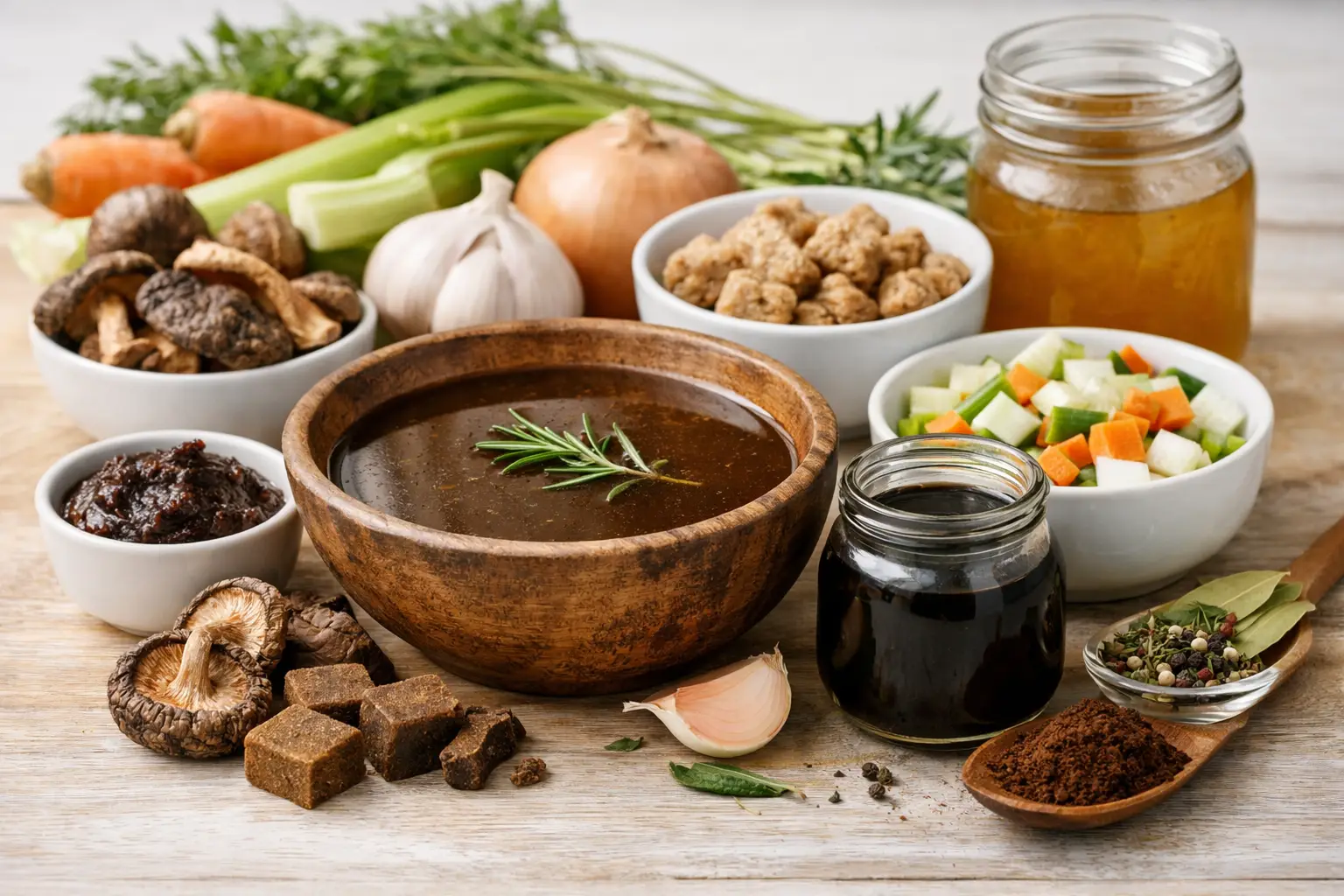
When a recipe calls for beef stock, it is usually asking for one thing more than anything else – depth. That dark, savory, slow-cooked character is what gives French onion soup its backbone, gravy its richness, and a weeknight pot of lentils the feeling that someone really cooked. The best vegan beef stock alternative is the one that brings that same depth without making your cooking more complicated.
That is good news, because you do not need a chemistry set or a full day at the stove to get there. You need a smart balance of umami, roasted notes, and a little body. Once you know what creates that beefy flavor profile, plant-based cooking opens up fast.
What makes beef stock taste like beef stock?
Beef stock is not just salty liquid. Its flavor comes from browned bones, roasted meat, long simmering, and aromatic vegetables. The result is savory, slightly sweet, a little earthy, and full on the palate.
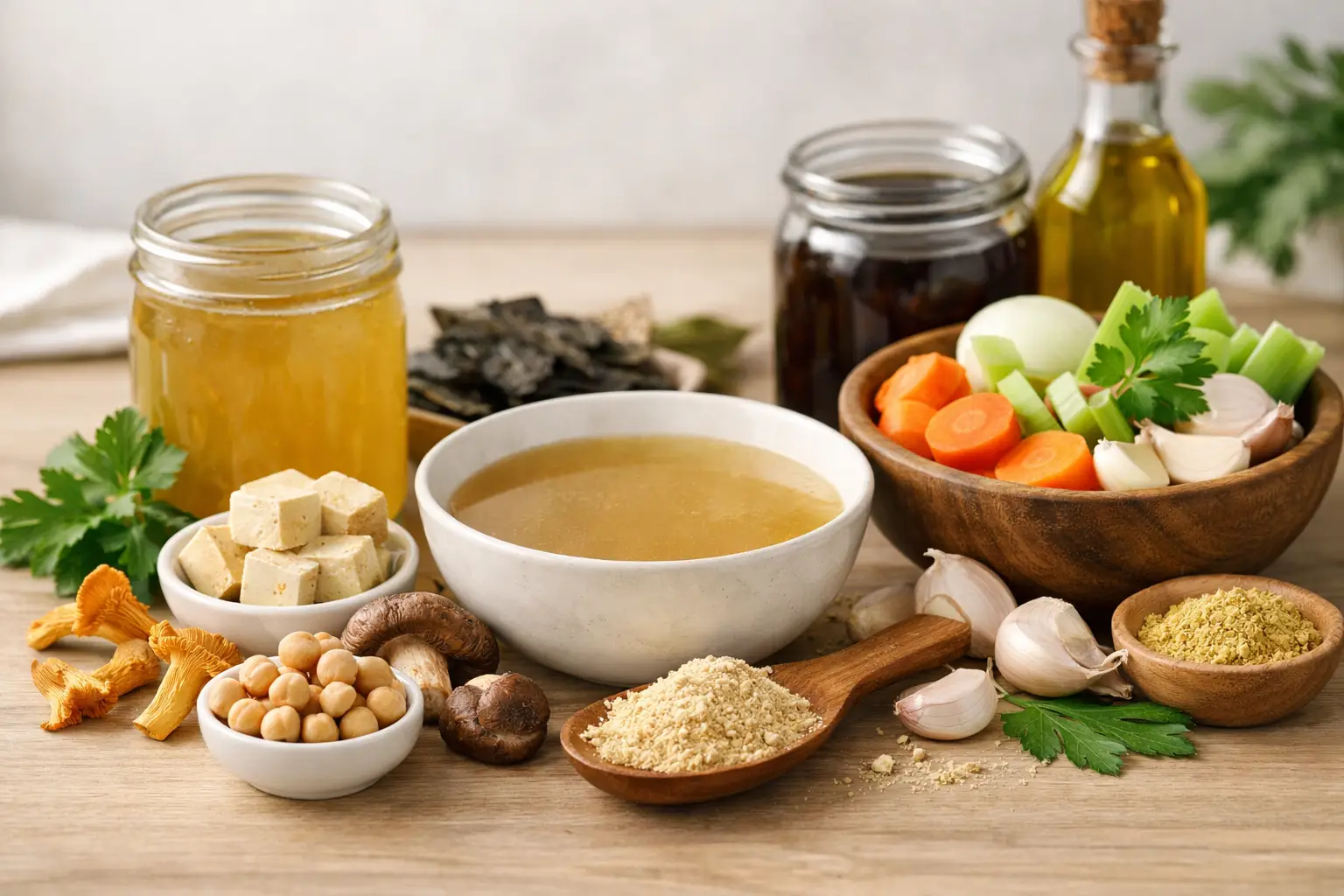
To recreate that in a vegan version, you need to build from ingredients that naturally bring glutamates and roasted complexity. Mushrooms are the obvious star, especially shiitake and portobello, because they add earthy depth. Roasted onions, carrots, and tomato paste contribute sweetness and color. Soy sauce, tamari, or miso bring salinity and fermented savoriness. Seaweed can add background minerality, though it needs a light hand. Black pepper, thyme, bay, and garlic help round everything out.
The missing piece is often body. Traditional stock has a certain weight to it. In plant-based cooking, that can come from a concentrated bouillon, a reduced broth, or ingredients like mushrooms and onions cooked until they are deeply caramelized.
The best vegan beef stock alternative for most home cooks
For most kitchens, the best vegan beef stock alternative is a dark, umami-rich vegetable bouillon or flavor concentrate designed to mimic the depth of slow-cooked stock. It gives you consistency, speed, and the kind of richness that actually works in real food, not just in theory.
This matters because convenience is part of good cooking. If your stock alternative only tastes right after two hours of simmering dried mushrooms, it may be delicious, but it is not always practical on a Tuesday. A concentrated vegan bouillon with roasted vegetables, mushrooms, herbs, and strong umami notes gets you much closer to the result people actually want: better flavor with less effort.
A chef-developed flavor booster can work especially well here because it is built with balance in mind. You want something savory and rounded, not flatly salty or aggressively mushroomy. Used properly, it can bring the bass notes that beef stock usually provides in risotto, braises, pan sauces, and soups.
When each alternative works best
Not every substitute behaves the same way, and that is where a lot of home cooks get disappointed. The best choice depends on the dish.
Mushroom broth for earthy depth
If you are making a stew, a dark gravy, or anything with onions, mushrooms, and herbs, mushroom broth is a strong option. It has the earthy tone people often associate with beef stock, and it feels naturally rich. The trade-off is that mushrooms can become the main flavor if the broth is too strong, which is perfect in some dishes and distracting in others.
Vegetable bouillon for everyday cooking
A good vegetable bouillon with strong umami notes is the most versatile choice. It works in soups, rice, sauces, and braised vegetables, and it is easy to control. The catch is quality. Some vegetable bouillons are bright and light, which is great for a spring soup but not enough for a beef stock role. You want one with darker, roasted character.
Miso and soy sauce for quick savory backup
If you are out of stock entirely, a mix of water, miso, and a splash of soy sauce or tamari can save dinner. This works best in noodle broths, gravies, and sauces where a little fermented richness makes sense. It is less convincing in classic dishes that need a cleaner stock flavor.
Homemade roasted broth for special dishes
If you love cooking and want full control, a homemade broth made from roasted onions, carrots, celery, garlic, mushrooms, tomato paste, herbs, and peppercorns can be excellent. Roast everything until dark at the edges, then simmer and reduce. It gives beautiful flavor, but it is more of a weekend move than a pantry solution.
How to make a vegan stock taste more like beef stock
This is where good cooks separate bland from memorable. Even a solid stock alternative often needs a little shaping depending on the recipe.
Start by browning your aromatics properly. Onions cooked until golden, not just soft, add sweetness and complexity. Mushrooms need time in the pan too. Let them release moisture and then actually brown. That deeper flavor matters more than most people think.
Tomato paste is another quiet hero. Cook it in oil for a minute or two until it darkens slightly. It loses raw sharpness and gains richness. A small splash of soy sauce or tamari can deepen the stock without announcing itself. If the dish wants more warmth, black pepper and thyme help. If it wants a little more roundness, a touch of miso whisked in at the end can do wonders.
The key is restraint. You are building background flavor, not trying to make the dish taste like ten different clever ingredients.
Best vegan beef stock alternative in real dishes
The easiest way to judge a stock substitute is to see how it performs where flavor really counts.
In onion soup, you need sweetness from slowly cooked onions and a stock with enough dark savoriness to carry the whole pot. A rich vegan bouillon or concentrated mushroom-forward broth works best here. A light vegetable stock can taste thin.
In gravy, body matters almost as much as flavor. Start with a dark bouillon or mushroom broth, then build with roux or cornstarch depending on the texture you want. A little soy sauce or miso can sharpen the savory edge if it feels flat.
In risotto, the stock should support, not dominate. This is where a balanced flavor concentrate shines. Too much mushroom can make the risotto heavy, while a more rounded plant-based stock keeps it elegant and savory.
For braised lentils, beans, or vegetables, you can go bolder. These dishes absorb flavor beautifully, so a darker, more concentrated broth pays off. Add garlic, herbs, and maybe a spoon of tomato paste, and the result feels deeply cooked even when the ingredient list is simple.
What to avoid when choosing a substitute
A few common mistakes make plant-based stock alternatives less satisfying than they should be.
The first is choosing a broth that is too light. If it tastes fresh, delicate, or sweet in a vegetable-forward way, it probably will not stand in for beef stock very well.
The second is overloading on mushroom powder or soy sauce. Both are useful, but too much can push the flavor into something muddy or overly assertive.
The third is forgetting salt balance. Concentrated products vary a lot. Taste as you go, especially if you are reducing the liquid in a sauce or stew.
Finally, do not expect one substitute to do every job perfectly on its own. Sometimes the best result comes from combining a dark bouillon with browned mushrooms and a small spoon of miso. That is not cheating. That is cooking.
A simple formula for better flavor
If you want an easy, repeatable approach, use this: start with a dark vegan bouillon or stock base, cook onions or mushrooms until well browned, add a little tomato paste, then adjust with soy sauce or miso if needed. That combination covers depth, savoriness, sweetness, and body.
This is exactly why modern pantry products can be so helpful. They do part of the heavy lifting, so you can focus on the dish instead of building stock from scratch every time. At Uhhmami, that flavor-first approach is the whole point: make great cooking easier, not more complicated.
So what should you keep in your kitchen?
If you cook often, keep one dark, savory vegan bouillon on hand as your baseline solution. Then think of mushrooms, miso, and soy sauce as your tuning tools. That setup handles almost everything, from quick gravies to long-simmered stews.
The best vegan beef stock alternative is not the one with the most dramatic ingredient list. It is the one that gives your food that satisfying, savory depth and fits the way you actually cook. Once you find it, a lot of everyday dishes get richer, cozier, and a lot more interesting.