English (United States)
  Danish
  German
  Dutch
Dutch  Spanish
  Swedish
  French
  Italian
  Norwegian
  Finnish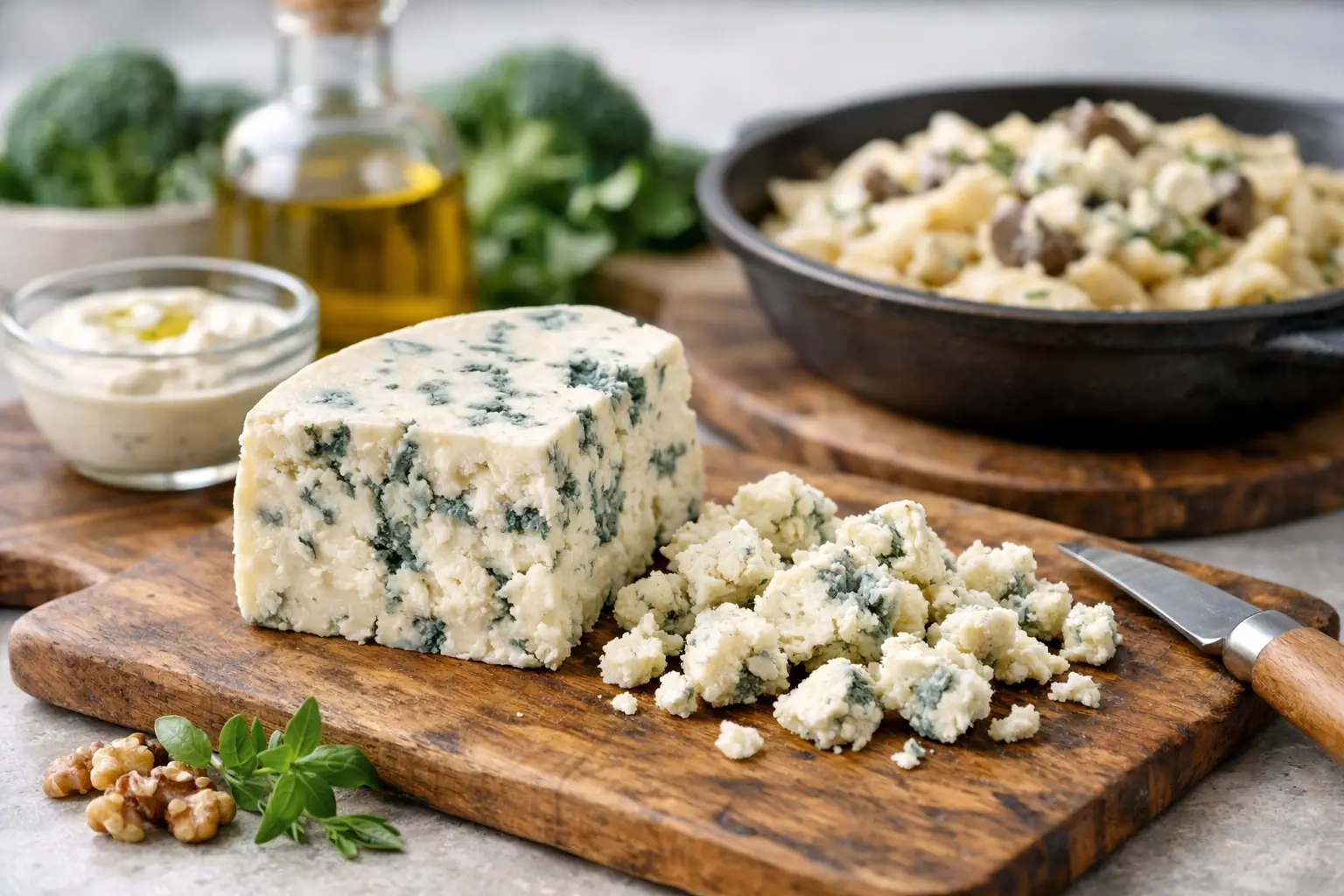
That steakhouse-style pasta sauce, the sharp edge in a dressing, the salty hit melted into a baked dish – blue cheese has a very specific job in cooking. So when you want a vegan blue cheese alternative for cooking, the goal is not to copy it perfectly. The goal is to recreate what it does on the plate: funk, salt, creaminess, and just enough bite to wake everything up.
That shift in thinking makes plant-based cooking much easier. Instead of chasing a one-to-one replacement, you start building flavor like a chef. A good substitute depends on the dish, the texture you need, and how bold you want the result to be.
What makes blue cheese hard to replace
Blue cheese is intense, but not in just one direction. It is creamy and crumbly at the same time. It is salty, tangy, rich, and slightly bitter, with that unmistakable fermented depth. In cooking, it can disappear into a sauce or stay distinct in small pockets, depending on how you use it.
That complexity is why many substitutes fall flat. Something creamy without funk tastes bland. Something tangy without richness feels thin. Something salty without depth can make a dish taste sharp rather than rounded.
The best vegan approach usually combines a few elements. You want fat for body, acid for lift, umami for depth, and a fermented or aged note for character. Once those pieces are in place, the result feels satisfying, even if it does not taste exactly like traditional blue cheese.
The best vegan blue cheese alternative for cooking depends on the dish
There is no single winner for every recipe. What works in a creamy pasta is different from what works in a salad dressing or a stuffed mushroom filling.
For sauces, cultured cashew-based blue cheese alternatives are often the closest fit. They melt reasonably well, carry tang, and bring some of that ripe, savory character. If you are buying one rather than making it, look for versions described as cultured, aged, or fermented. Those words usually signal more depth and less of the flat, starchy taste that some plant-based cheeses have.
For dips, dressings, and cold applications, tofu- or cashew-based blue cheese alternatives can work beautifully because texture matters more than melt. Here, a crumbly finish is actually helpful. You want a dressing that feels thick, punchy, and slightly sharp, not just creamy.
For cooking from scratch, a blend often beats a ready-made substitute. Think soaked cashews for richness, miso for savory depth, lemon juice for brightness, and a touch of sauerkraut brine or apple cider vinegar for fermentation-like tang. Add a flavor booster or concentrated vegetable bouillon and the whole thing starts to taste more complete, not just more salty.
How to build the flavor at home
If you like cooking by instinct, this is where things get interesting. A homemade vegan blue cheese alternative for cooking does not need a long ingredient list. It needs the right kind of balance.
Start with a creamy base. Cashews give the richest result, especially for sauces and bakes. Silken tofu is lighter and useful when you want something spoonable but not too heavy. A mix of the two is often ideal.
Then bring in the savory depth. White miso is excellent because it adds salt and fermentation without taking over. Nutritional yeast adds a cheesy, nutty note, but it works best as a background flavor rather than the main event. A small amount of onion powder or garlic powder can round things out.
Next comes acidity. Lemon juice is clean and bright. Apple cider vinegar has more edge. Pickle brine or sauerkraut brine can bring a more lived-in tang, which is helpful if you want that slightly funky character blue cheese is known for.
Finally, add a source of concentrated umami. This is where a chef-style pantry helps. A spoonful of strong vegetable bouillon, a savory flavor concentrate, or even a reduced mushroom stock can deepen the mixture fast. Uhhmami’s approach to flavor is built around exactly this idea: when the savory foundation is right, plant-based dishes taste full rather than like a compromise.
If you want a bit of the visual effect of blue cheese crumbles, fold in finely chopped toasted walnuts or hemp seeds after blending. They add texture and make the mixture feel less uniform and more cheese-like in a dish.
Where it works best in everyday cooking
Blue cheese rarely plays a quiet role, so your substitute should go into dishes that can hold their own.
Pasta and gnocchi
This is one of the easiest wins. Stir a cashew-based blue cheese alternative into hot pasta water with sauteed mushrooms, spinach, or caramelized onions. The starch helps the sauce cling, and the earthy vegetables support the funky notes. Gnocchi works especially well because the soft texture loves a rich, salty coating.
Dressings and dips
A creamy dressing is a natural home for these flavors. Blend your base with extra lemon, black pepper, and enough water to make it pourable. Toss it with romaine, radicchio, roasted broccoli, or little gem lettuce. It is also excellent as a dip with buffalo cauliflower, roasted potatoes, or crisp vegetables.
Baked vegetables and gratins
Blue cheese has a way of making roasted vegetables feel more luxurious. A vegan version can do the same, especially with cauliflower, leeks, mushrooms, or potatoes. Dot the sauce over the top before baking, or stir it into a breadcrumb topping so you get browned, savory pockets across the dish.
Burgers, flatbreads, and sandwiches
This is where stronger flavors really shine. Spread a thick layer on a burger with caramelized onions, roasted mushrooms, or charred peppers. Add small spoonfuls to flatbread with pears, walnuts, and arugula if you want that classic sweet-bitter-salty contrast.
When store-bought is the better choice
Not every dinner needs a blending session. If the dish depends on a clear blue cheese identity, a ready-made product can be the smarter move. That is especially true for wedge salads, quick sauces, or appetizers where the cheese flavor is front and center.
The trade-off is that not all store-bought options behave well under heat. Some stay chalky, some separate, and some lose their punch when melted. If you are trying a new brand, test it in a small amount first. A tablespoon stirred into warm oat cream or plant milk will tell you a lot about how it handles cooking.
For hot dishes, it often helps to combine the cheese with another ingredient rather than melting it on its own. Blend it into a sauce, whisk it into a soup, or crumble it over a dish right at the end so the heat softens it without flattening the flavor.
Common mistakes that dull the flavor
The biggest mistake is making it too mild. Blue cheese is not subtle, so the substitute should not be either. If your first version tastes pleasant but forgettable, it probably needs more acid, more umami, or a little bitterness.
The second mistake is chasing funk with too much vinegar. Acidity matters, but too much creates a sour result instead of a mature, savory one. That deeper note usually comes from fermentation-style ingredients such as miso, cultured cheese, or brine.
Another issue is texture. A vegan blue cheese alternative for cooking should match the recipe. If your pasta sauce is grainy, blend it longer and loosen it with hot water. If your dressing is too runny, add more cashews or tofu. If your baked dish feels heavy, brighten it at the end with lemon zest or chopped herbs.
A simple flavor formula to remember
When you want that blue cheese effect in a plant-based dish, think in four parts: creamy base, salty umami, sharp acid, and a fermented edge. That formula works whether you are making a quick dressing on a Tuesday night or finishing a pan sauce for guests.
It also gives you room to cook with what you have. No cashews? Try silken tofu and olive oil. No miso? Use a spoonful of bouillon and nutritional yeast. No cultured vegan cheese in the fridge? Build depth with mushrooms, brine, and a little patience.
That is the real advantage of a good substitute. It does not just imitate one ingredient. It opens up a more flexible way to cook – one that is bold on flavor, easy to adapt, and surprisingly satisfying when dinner needs to happen fast.
The best vegan blue cheese alternative for cooking is the one that makes your dish taste complete, not the one that tries hardest to be something else.