English (United States)
  Danish
  German
  Dutch
Dutch  Spanish
  Swedish
  French
  Italian
  Norwegian
  Finnish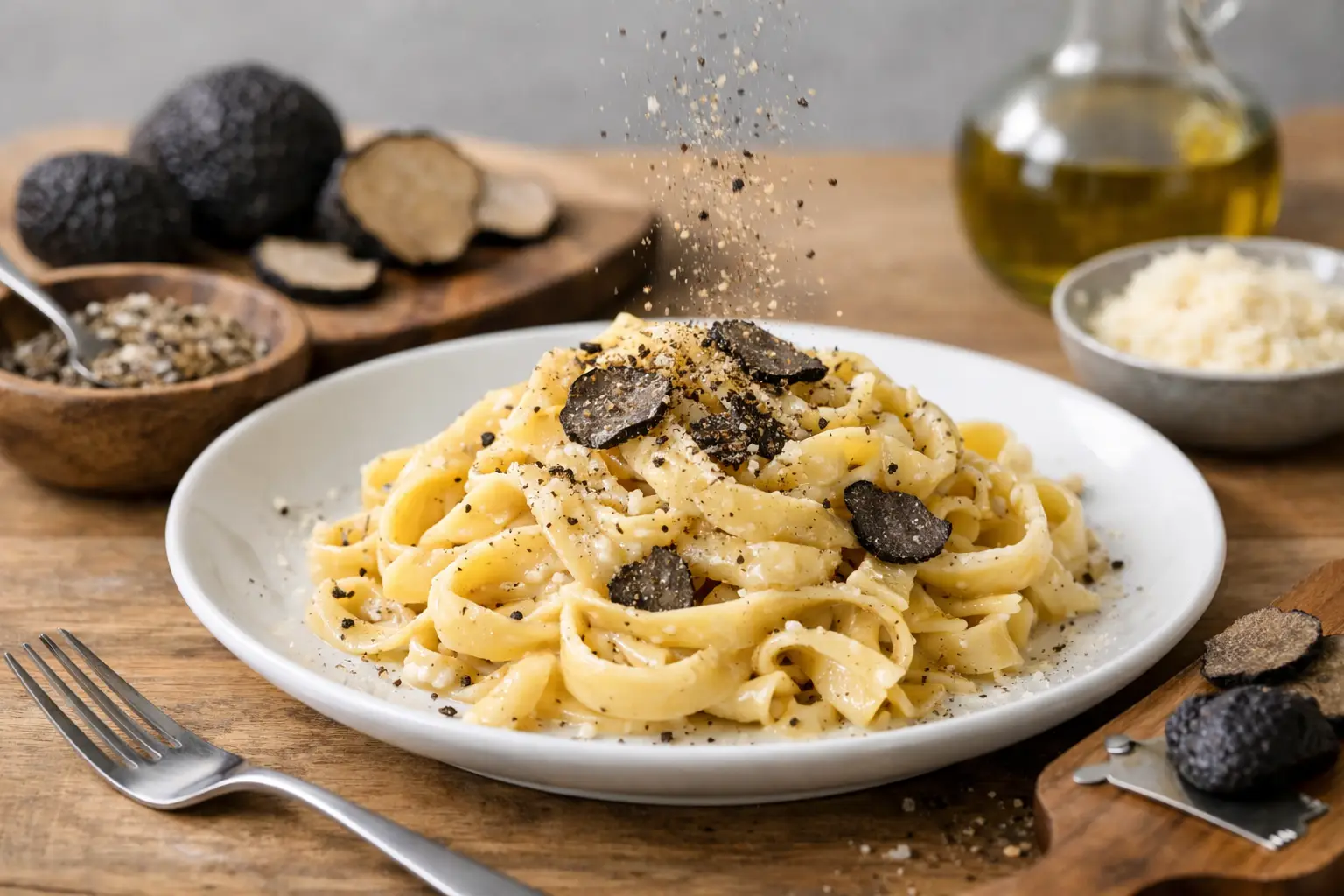
A little truffle seasoning can turn a plain bowl of pasta into something that feels restaurant-level fast. The trick with truffle seasoning for pasta is not using more. It is using it more precisely, so the aroma stays elegant, the pasta still tastes like itself, and every other ingredient has room to do its job.
That matters because truffle flavor is easy to get wrong. Too much, and the dish can taste heavy, sweet, or oddly perfumed. Too little, and it disappears under butter, cream, garlic, or cheese. The sweet spot is small, but once you know where it is, truffle pasta becomes one of the easiest ways to make dinner feel special without making it complicated.
Why truffle seasoning works so well with pasta
Pasta is an ideal stage for truffle because it is warm, starchy, and naturally good at carrying aroma. A smooth sauce clings to the noodles and helps distribute the seasoning evenly, while the starch from the pasta water softens and rounds out the flavor. You do not need a long ingredient list. In fact, truffle usually tastes better when the dish is built with restraint.
The best truffle pasta dishes work because they create contrast. Earthy aroma sits against creamy butter or olive oil. Salt sharpens the perfume. Cheese adds savoriness. Mushrooms, onions, or leeks can deepen the base without competing too aggressively. Even black pepper matters, but usually in a lighter hand than you might use for cacio e pepe or Alfredo.
There is also a practical reason truffle seasoning makes sense at home. Fresh truffle is beautiful, but it is expensive, seasonal, and delicate. A good seasoning gives you a more accessible way to bring that distinctive flavor into a weeknight meal, especially when you only need a pinch or two.
Choosing the right truffle seasoning for pasta
Not all truffle seasonings behave the same way. Some are salt-based, some are powdered blends, and some lean heavily on garlic, mushroom, or nutritional savory notes to create a fuller profile. That changes how you use them.
If your seasoning already contains salt, treat it as both a finishing flavor and part of your seasoning plan from the start. Salt the pasta water a little more gently than usual, then adjust at the end. If it is a low-salt or salt-free blend, you have more room to build the dish normally and finish with a clearer hit of truffle.
This is also where quality shows. The most useful truffle seasonings do not try to overwhelm the dish. They give you layered savory depth and aroma, not just a single loud note. For a brand like Uhhmami, that kind of flavor-first thinking is what makes seasoning worth keeping in the pantry. It should make dinner easier and better, not just more intense.
When to add truffle seasoning
Timing is everything with truffle. Add it too early over high heat, and the aroma can flatten out. Add it too late without enough fat or moisture, and it can sit on top of the dish instead of blending in.
In most pasta recipes, the best moment is near the end. Build the sauce first, whether that is butter and pasta water, a light cream sauce, sautéed mushrooms with olive oil, or a silky pan sauce with shallots. Once the heat is low or off, stir in the truffle seasoning and toss well. That keeps the aroma vivid.
If you want more dimension, use a two-step approach. Add a small amount into the sauce, then finish with a tiny extra pinch after plating. You get depth underneath and freshness on top. The key word is tiny. Truffle should pull you in, not announce itself from across the room.
The best pasta styles for truffle flavor
Truffle seasoning is not limited to one kind of pasta, but some shapes and sauces carry it better than others.
Long noodles like tagliatelle, fettuccine, and linguine are classic because they hold glossy sauces beautifully. Every strand gets coated, which makes the flavor feel even and luxurious. Short shapes like rigatoni or penne can work too, especially with mushroom-based or baked pasta dishes, but they tend to give a chunkier, less delicate bite.
Filled pasta is more situational. Truffle can be excellent with mushroom ravioli or a simple cheese tortellini, but only if the filling is not already too rich or too sweet. If the pasta itself is doing a lot, go lighter on the seasoning.
Cream is often the first thing people reach for with truffle, and that can be delicious, but it is not your only option. Some of the best truffle pasta dishes are based on butter and pasta water, or olive oil, lemon zest, and a little cheese. Cream gives body, but it can also mute aroma if you pour it on too heavily.
Ingredients that pair well with truffle seasoning for pasta
The best pairings are ingredients that support truffle rather than compete with it. Mushrooms are an obvious match, but not because they taste the same. They provide earthiness and umami that make truffle feel more grounded. Brown butter does something similar, adding nutty warmth.
Cheese is useful, but choose with care. Parmigiano Reggiano, pecorino, or an aged hard cheese can all work in moderation. Fresh mozzarella usually adds too much moisture without enough character. Blue cheese can overpower the dish unless used very sparingly.
Alliums like shallots and leeks are often better than a heavy dose of garlic. Garlic has a habit of taking over, especially in a simple pasta. If you love garlic, soften it gently in butter or oil so it stays sweet and quiet.
Greens can bring balance. A handful of spinach folded into a creamy truffle pasta can lighten the feel of the dish. Peas add sweetness, which some people love and others find distracting. It depends on whether you want the pasta to feel springy and bright or darker and more savory.
Protein is possible, but not always necessary. Roast chicken, a soft egg, or crisp mushrooms can all fit naturally. If you add cured meats like pancetta, watch the salt and the intensity. Truffle already brings a lot to the plate.
A simple method that gets it right
Start by cooking your pasta until just shy of done. Save more pasta water than you think you need. In a wide pan, melt butter or warm olive oil with finely chopped shallot or a few slices of leek until soft. If you are adding mushrooms, cook them until their moisture is gone and their edges start to color.
Add a splash of pasta water and the drained pasta, then toss until glossy. Fold in grated cheese if you want it, and lower the heat. Now add your truffle seasoning gradually, tasting as you go. This is not a shake-it-on situation. It is a pinch, toss, taste, and adjust situation.
Finish with black pepper, more pasta water if the sauce tightens up, and maybe a little lemon zest if the dish feels too rich. That small touch of brightness can make the truffle feel cleaner and more defined. Not every truffle pasta needs cream, and not every truffle pasta needs mushrooms. It always needs balance.
Common mistakes that flatten the flavor
The biggest mistake is overdoing it. More truffle seasoning does not create a better pasta. It usually creates a less nuanced one. The second mistake is pairing it with too many bold ingredients at once. Garlic, cream, bacon, truffle, strong cheese, and herbs can sound exciting together, but they rarely leave room for clarity.
Another common issue is heat. If the pan is aggressively hot when the seasoning goes in, you lose some of the aroma you are paying for. And if the sauce is too thick, the flavor can come across as muddy. A little pasta water is often the difference between heavy and silky.
Finally, taste before serving. Truffle seasonings vary wildly in strength. What works with one blend may be too much for another. A confident cook does not guess here. A confident cook tastes.
Truffle pasta for weeknights and guests
One of the nicest things about truffle seasoning is that it scales both ways. On a Tuesday night, it can lift a bowl of buttered noodles, mushrooms, and cheese into something more memorable. For guests, it can become a polished dish with roasted mushrooms, fresh herbs, and a silky sauce that feels thoughtful without being fussy.
That is really the appeal. Truffle pasta sounds dramatic, but the best version is often the simplest one. Good seasoning, careful timing, a little restraint, and a sauce that actually lets the aroma shine. If dinner tastes deeply satisfying and still feels easy, you are already doing it right.
The next time pasta feels like the fastest option in the house, take that as good news. With truffle seasoning in the pantry and a light hand at the stove, fast can taste remarkably polished.